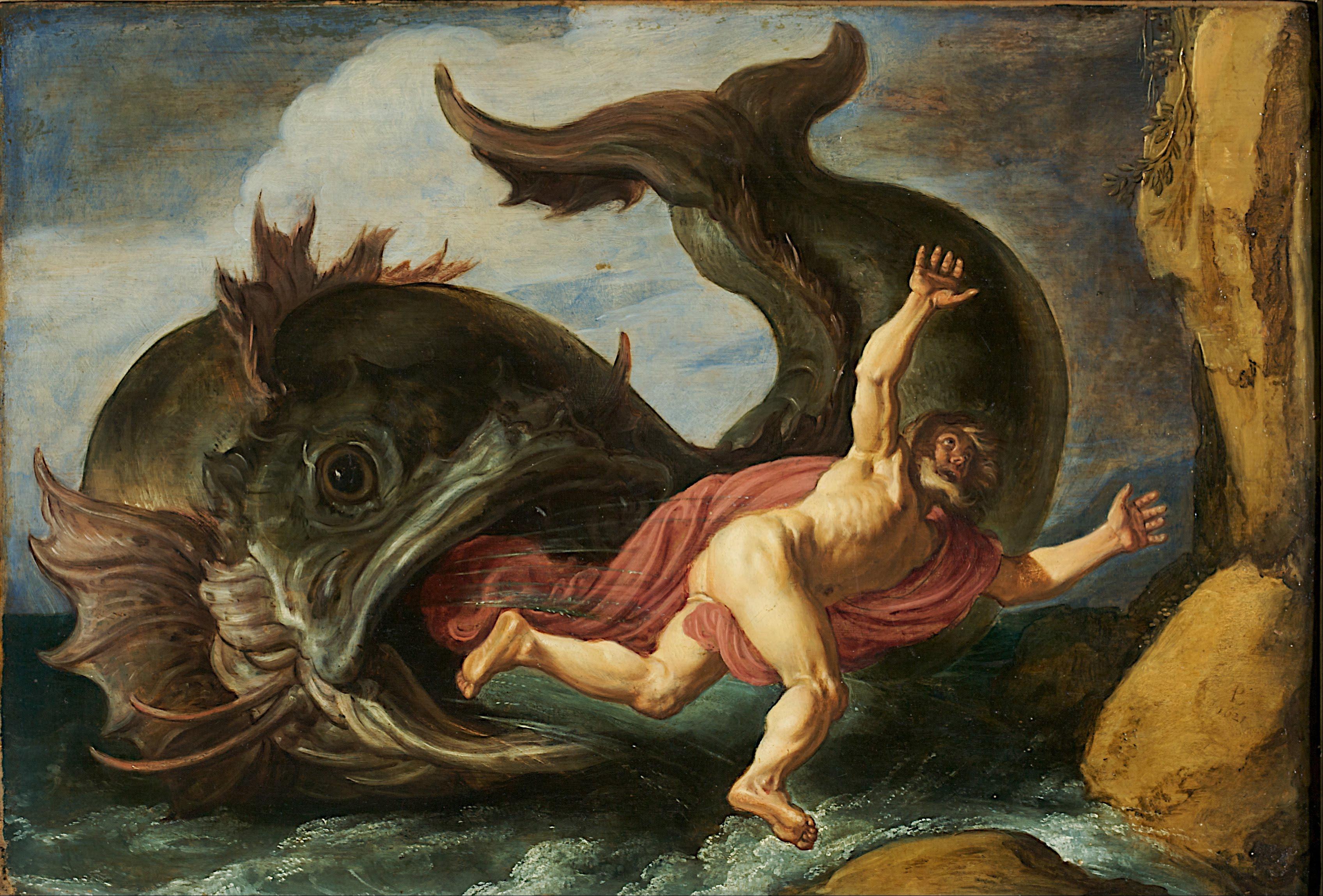
The Book of Jonah is a Jewish and Christian religious text, found in the Old Testament of the Bible. Though the Book is quite short, it contains one of the most popular stories in the entire Bible – perhaps in large degree because the tale is so popular among children. Jonah is considered to be one of the twelve minor prophets and this text is a historical account of how God used him to help bring the people of Nineveh to repentance of their sins.
I generally try to do Bible studies with free resources online. I like to make my work as accessible and as cross-reference friendly as possible. That said, if you are interested in a study of Jonah, already completed by an actual scholar, I will direct you to the following:
We live in interesting times. There is a lot of really excellent recent scholarship, but I would advise anyone reading any scholarly work that if one comes across a textual interpretation that seems outlandish, or one that is dripping with overt modern political undertones, perhaps you should read other works as well.
Modern Bible scholars are divided on whether the Book of Jonah is fictional, and often at least partially satirical. The character of Jonah son of Amittai may have been based on the historical prophet of the same name who prophesied during the reign of King Amaziah of Judah, as mentioned in 2 Kings.
Although the creature that swallowed Jonah is often depicted in art and culture as a whale, the Hebrew text uses the phrase “large fish”. In the 17th century and early 18th century, the species of the fish that swallowed Jonah was the subject of speculation by naturalists, who interpreted the story as an account of a historical incident. Some modern scholars of folklore, on the other hand, note similarities between Jonah and other legendary religious figures, like the Indian yogi Matsyendranatha “Lord of the Fishes”, the Sumerian king Gilgamesh, and the Greek hero Jason.
Date
The historical Jonah is dated the the 700s BC, based on mention of him in the book 2 Kings. (from wiki)
The prophet Jonah (Hebrew: יוֹנָה, Yonā) is mentioned in 2 Kings 14:25, which places Jonah’s life during the reign of Jeroboam II (786–746 BC), but the book of Jonah itself does not name a king or give any other details that would give the story a firm date. The majority of scholars date the book much later, to the post-exilic period sometime between the late 5th to early 4th century BC; perhaps (along with Book of Ruth) as a counter to the emphasis on racial purity in the time of Ezra. An even later date is sometimes proposed, with Katherine Dell arguing for the Hellenistic period (332–167 BC).
Assyriologist Donald Wiseman takes issue with the idea that the story is late (or a parable). Among other arguments he mentions that the “Legends of Agade” (see Sargon of Akkad and Rabisu) date to the time of the Old Babylonian Empire, though later versions “usually taken as a late composition, propagandistic fairy tale or historical romance can now, on the basis of new discoveries of earlier sources, be shown to be based on a serious and reliable historical record”.
Surviving ancient manuscripts
The whole Book of Jonah in Latin as a part of Codex Gigas, made around 13th century.
Fragments of this book in Hebrew were found among the Dead Sea Scrolls (cumulatively covering the whole book), including 4Q82 (4QXIIg; 25 BCE) with extant verses 1:1‑9, 2:3‑11, 3:1, 3:3, and 4:5‑11; and Wadi Murabba’at Minor Prophets (Mur88; MurXIIProph; 75–100 CE) with extant verses 1:14‑16, 2:1‑7; 3:2‑5, 3:7‑10; 4:1‑2, and 4:5.
The oldest known complete version of the book is the Crosby-Schøyen Codex, part of the Bodmer Papyri, which dates to the 3rd century, and is written in Coptic.
Fragments containing parts of this book in Greek were found among the Dead Sea Scrolls, including 4Q76 (4QXIIa; 150–125 BCE) with extant verses 1:1–5, 1:7–10, 1:15–17 (1:17 = 2:1 in Hebrew Bible), 2:6 (verses 2:1,7 in Masoretic Text), and 3:2; 4Q81 (4QXIIf; 175–50 BCE) with extant verses 1:6–8, 1:10–16; 4Q82 (4QXIIg; 25 BCE) with extant verses 1:1–9, 2:2–10 (verses 2:3–11 in Masoretic Text), 3:1–3, and 4:5–11; and Wadi Murabba’at Minor Prophets (Mur88; MurXIIProph; 75–100 CE) with extant verses 1:1–17 (1:1–16, 2:1 in Hebrew Bible), 2:1–10 (verses 2:1–11 in Masoretic Text), 3:1–10, and 4:1–11., and Naḥal Ḥever (8ḤevXIIgr; 1st century CE) with extant verses 2:1–6 (verses 2:1–7 in Masoretic Text), 3:2–5, 3:7–10, 4:1–2, and 4:5.
Author
The book is considered to be anonymously written. Given the nature of the story, if we assume its historicity, then we should also assume that the story was originally given orally by Jonah himself. (Who else would have known the details?)
There are several interesting parts of this story, which I look forward to studying in greater detail. Where is Tarshish? What was the big fish? Why is Jonah so displeased that Nineveh repents and why does the book end in what feels like an abrupt way?